




Murcia doesn't make it onto many travellers' shortlists, and that's precisely why it should be on yours. Wedged between Valencia and Andalusia in south-eastern Spain, this sun-hammered, baroque-splashed city operates entirely on its own terms — unhurried, unfussy, and almost entirely free of the package-holiday circus that has swallowed much of the Mediterranean coast. The food is extraordinary, the architecture is genuinely world-class, and the locals eat dinner at times that would give a British GP genuine pause. If you're serious about discovering things to do in Murcia Spain that go beyond a TripAdvisor tick-list, you're in the right place.
What follows is a properly curated guide — specific streets, real dishes, living culture — built for travellers who want to understand a city rather than merely photograph it.
Understanding Murcia: The City at a Glance
Murcia is the capital of its eponymous autonomous region, a landlocked city of around 460,000 people sitting on the banks of the Río Segura. Despite being inland, it sits in Spain's most productive agricultural region — the so-called huerta, a fertile river plain that has been cultivated since Moorish times and continues to supply much of Europe's salad leaves, citrus fruit, and artichokes. That agricultural abundance feeds directly into the city's food culture, which is arguably the finest of any Spanish city you've never thought to visit.
The climate is the driest in mainland Spain — over 300 days of sunshine per year and barely 300mm of annual rainfall. Summers are ferocious (regularly above 40°C in July and August), so the ideal windows are spring and autumn, when temperatures sit pleasantly between 18°C and 26°C and the city hums with festivals and outdoor life.
The Cathedral of Santa María: Start Here, Always
Every serious visit to Murcia begins at the Cathedral of Santa María, and with good reason. Construction began in 1394 on the site of a former mosque, but the building you see today is a gloriously mongrel structure — Gothic bones, Renaissance chapels, and one of the most extravagant baroque facades in all of Spain, completed in 1792. Stand in the Plaza del Cardenal Belluga at dusk, when the stone turns amber, and you'll understand immediately why architectural historians get emotional about this city.
Don't just photograph the exterior. Go inside and find the Capilla de los Vélez, a late Gothic funerary chapel so ornately carved it looks less like stonework and more like lace. The cathedral tower, at 95 metres, is climbable and offers a panoramic view over the rooftops that will recalibrate your understanding of the city's scale. Entry to the museum and tower is a few euros and completely worth it. More information is available via the official Cathedral of Murcia website.
The Casino de Murcia: The Most Surprising Interior in Spain
A short walk from the cathedral along Calle Trapería brings you to what might be the most underrated interior in the country. The Casino de Murcia is not a gambling establishment but a private gentlemen's club founded in 1847, now open to the public. The entrance fee is minimal; the reward is extraordinary.
The building moves through architectural styles room by room as if it simply couldn't decide which century to belong to. There's an Arab patio modelled on the Alhambra, a French Louis XVI ballroom, a Pompeian room with trompe l'oeil ceilings, and — perhaps most astonishing of all — a library with a ceiling painted to resemble an open sky, complete with clouds. It sounds kitsch; it is, in fact, breathtaking. Allow a minimum of 45 minutes and keep looking upwards. Full visiting information is on the Casino de Murcia website.
Eating in Murcia: The Mercado de Verónicas and Beyond
If architecture is Murcia's calling card to outsiders, food is what converts them into devotees. The Mercado de Verónicas, a Modernista iron-and-glass market hall sitting directly on the Río Segura, is the engine room of this culinary culture. It opens early and trades furiously until early afternoon — stalls piled with pimientos de piquillo, wedges of salted tuna, fresh michirones (dried broad beans for slow cooking), and seasonal vegetables that look like they've been lit by a professional photographer.
For eating rather than just shopping, pull up a stool at one of the market bars and order zarangollo — a Murcian scramble of courgette, onion, and egg that sounds simple and tastes revelatory — alongside a cold glass of monastrell, the indigenous grape variety that dominates the regional wine production. Murcia's proximity to the Jumilla wine region means the house wine in even ordinary tapas bars is frequently excellent.
In the evenings, the tapas circuit along Calle Arco de Santo Domingo and the streets around Plaza de las Flores demands participation. Spanish tortilla, marineras (a swirl of Russian salad on a salty cracker topped with an anchovy), and pulpo a la murciana — octopus dressed with olive oil and sweet paprika — are the staples. Eating standing up at a zinc counter is not a compromise in Murcia; it is the correct way to do things.
The Real Academia Alfonso X El Sabio and Murcia's Museum Culture
Murcia's museums punch well above their weight for a city of this size. The Museo de Bellas Artes de Murcia (MUBAM) on Calle Obispo Frutos houses a solid permanent collection with particular strength in Baroque painting and sculpture, including works by the great Murcian sculptor Francisco Salzillo — a name you'll encounter repeatedly in the city and rightly so.
Salzillo (1707–1783) is the artistic soul of Murcia. His polychrome wood sculptures, pasos, are the centrepiece of the city's famous Easter processions and are exhibited year-round at the dedicated Museo Salzillo in Plaza San Agustín. Even for visitors who don't typically engage with religious art, these figures — expressing grief, fear, and grace in painted cedar and walnut — are profoundly affecting. The museum provides genuine context for why Murcia's Semana Santa is classified as a Fiesta of International Tourist Interest.
Semana Santa and the Bando de la Huerta: Two Unmissable Festivals
Timing a visit around Murcia's festivals transforms the experience entirely. Semana Santa — Holy Week in late March or early April — sees Salzillo's pasos carried through the streets in candlelit processions of extraordinary solemnity. The Friday night procession, known locally as the Viernes Santo, draws crowds of tens of thousands and operates on a schedule of rigid tradition — floats moving through specific streets at specific times, with the whole city knowing its role by heart.
Two weeks later, the Spring Festival (Fiestas de Primavera) delivers an entirely different register with the Bando de la Huerta — the Gathering of the Orchard. This is Murcia celebrating its agricultural roots: a parade of tens of thousands of people dressed in traditional huertano costume, mule carts draped in flowers, and the free distribution of local produce on the streets. It is joyous, loud, carnivalesque, and completely unlike anything you'll find anywhere else in Spain. Check current dates via the Murcia City Council website.
The Río Segura Riverside and the Malecon Gardens
One of the great simple pleasures of Murcia is a morning walk along the Río Segura. The river path runs through the city past weeping willows and orange trees, and on weekend mornings it fills with cyclists, runners, and elderly couples in no particular hurry — the social pulse of the city made visible. Follow the river west and you'll reach the Jardín del Malecón, one of Spain's oldest public gardens, established in the 17th century as a flood barrier and now a long, shaded promenade planted with palms, roses, and century-old ficus trees. It is precisely the kind of place that rewards doing absolutely nothing in particular.
Day Trips Within Reach: The Huerta, Cartagena, and the Coast
Murcia is an excellent base for exploring the wider region, and a car opens up possibilities that public transport cannot. The walled city of Cartagena, just 50km south, is one of the great overlooked Roman sites of the Iberian Peninsula — its Teatro Romano, buried and forgotten for centuries beneath later buildings before excavation began in 1988, is now a UNESCO-listed site with a genuinely brilliant attached museum. The city also has fine examples of Modernista architecture and a seafront that merits an evening.
For anyone interested in history, the wine country around Jumilla and Yecla — both within an hour's drive — offers bodegas that receive visitors with minimal fuss and maximum generosity. If you're planning a broader itinerary across the region, our guide to the best day trips from Murcia Spain you can do by car maps out exactly how to use the city as a launchpad.
Beaches: The Mar Menor and Beyond
Murcia's coastline — the Costa Cálida — is reached in under an hour from the city centre and offers something genuinely different from the overdeveloped Mediterranean norm. The Mar Menor, a shallow saltwater lagoon separated from the Mediterranean by a thin strip of land called La Manga, has waters so warm and calm that it functions essentially as a natural spa. Children paddle in thigh-deep water hundreds of metres from shore; adults float for hours in water that rarely drops below 20°C even in October.
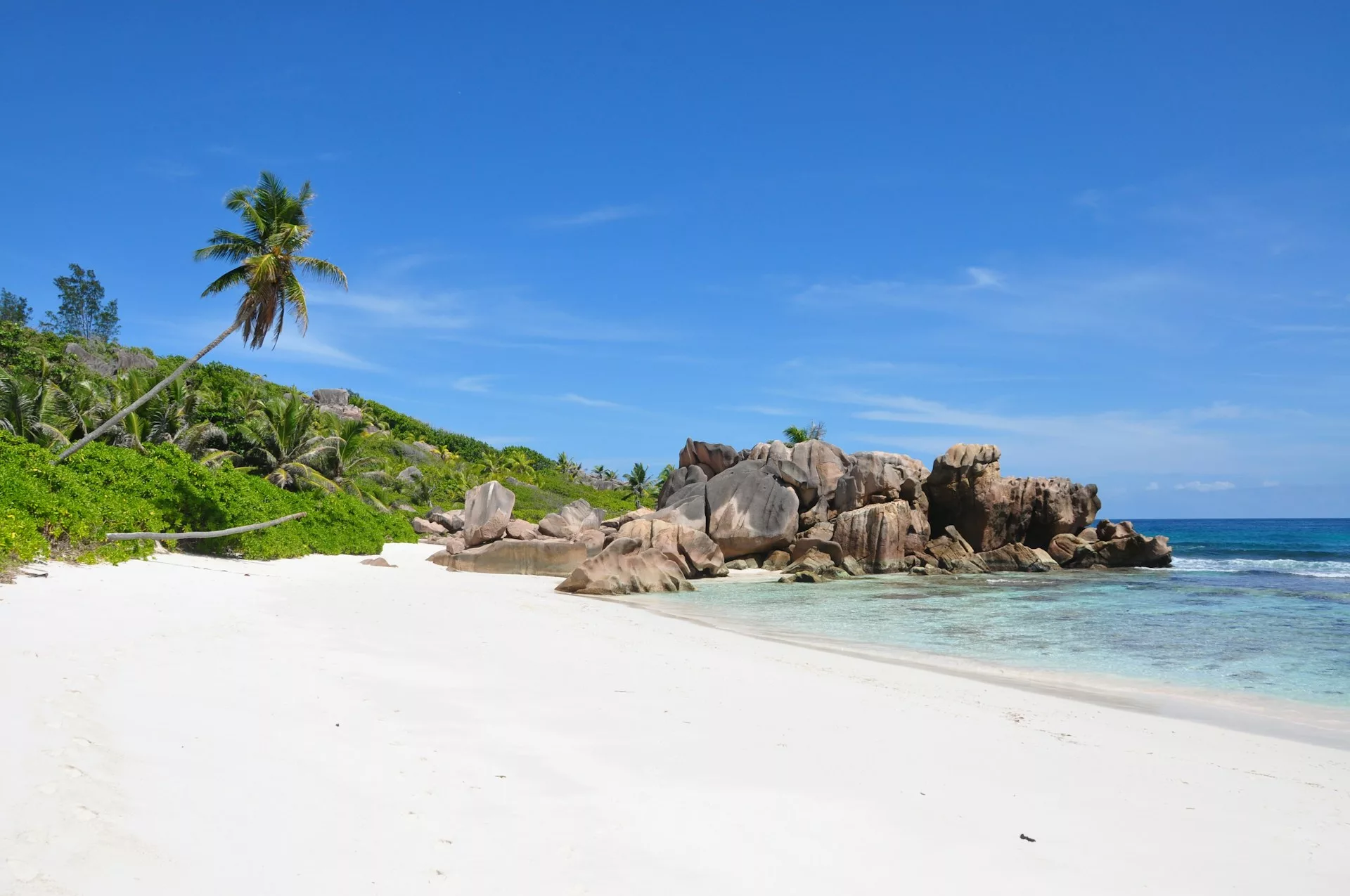
Beyond the Mar Menor, the coastline becomes dramatically rugged around the Calblanque Natural Park — wind-carved cliffs, isolated coves of dark sand, and almost no commercial infrastructure. It's the antithesis of the Costa del Sol and all the better for it. For a full breakdown of the region's finest coastal options, read our guide to the most stunning beaches near Murcia.
Practical Information: Getting Around Murcia
The city centre is highly walkable — most of the major sights sit within a 20-minute walk of the cathedral. For wider exploration, Murcia has a reasonable bus network operated by LAT Bus, covering routes into the surrounding huerta and towards the coast. For the beaches and day trips to Cartagena, a hire car is the most practical solution — parking outside the centre is straightforward and affordable by Spanish city standards.
Murcia–San Javier Airport (also known as Corvera Airport after the newer facility that replaced it) handles flights from several UK airports, including connections from London Stansted and Manchester. Transfer times from the airport into the city centre run to approximately 40–50 minutes depending on traffic.
The Spanish custom of long lunches (2pm–4pm) and late dinners (9pm onwards) is observed faithfully here. Trying to eat dinner at 7pm in Murcia is a lonely undertaking — the restaurants will be empty and the staff will regard you with polite bewilderment. Embrace the rhythm and your holiday will improve immediately.
The Honest Verdict on Murcia
Murcia rewards travellers who show up with curiosity and without too many preconceptions. It lacks the global name recognition of Seville or the architectural set-pieces of Barcelona, but it compensates with something rarer: the sensation of encountering a city that is genuinely itself. The baroque cathedral is world-class. The food — rooted in the huerta, honest in its flavours — is among the finest regional cooking in Spain. The festivals, when the whole city organises itself around shared ritual, are unforgettable. And because relatively few foreign tourists make it here, the experience retains an authenticity that more famous destinations have long since traded away. Come for a long weekend; leave with a list of reasons to return.

Standard Minivan
 5
5
from just €7.65 per person
Group travel? Perfect option is our minivan, 5 passengers and 4 medium suitcases

Standard Saloon
3
from just €10.20 per person
Travel in comfort in these late model saloons, takes 3 passengers and 2 medium suitcases

Large Standard Minivan
8
from just €11.05 per person
Group travel? Perfect option is our large minivan, 8 passengers and 6 medium suitcases

Executive Saloon
3
from just €17.00 per person
Travel in style in these late model saloons, takes 3 passengers and 2 medium suitcases

Standard Minibus
9
from just €18.70 per person
Group travel? Perfect option is our minibus with upwards of 9 passengers and 9 medium suitcases

Luxury Saloon
3
from just €22.95 per person
Travel in luxury in these late model saloons, takes 3 passengers and 2 medium suitcases
Door to door private airport transfers to your destination, anywhere!
Ride Transfer Direct is a company dedicated to quality airport transfers globally. Our team have over 60 years of experience delivering services in the most popular destinations around the world