




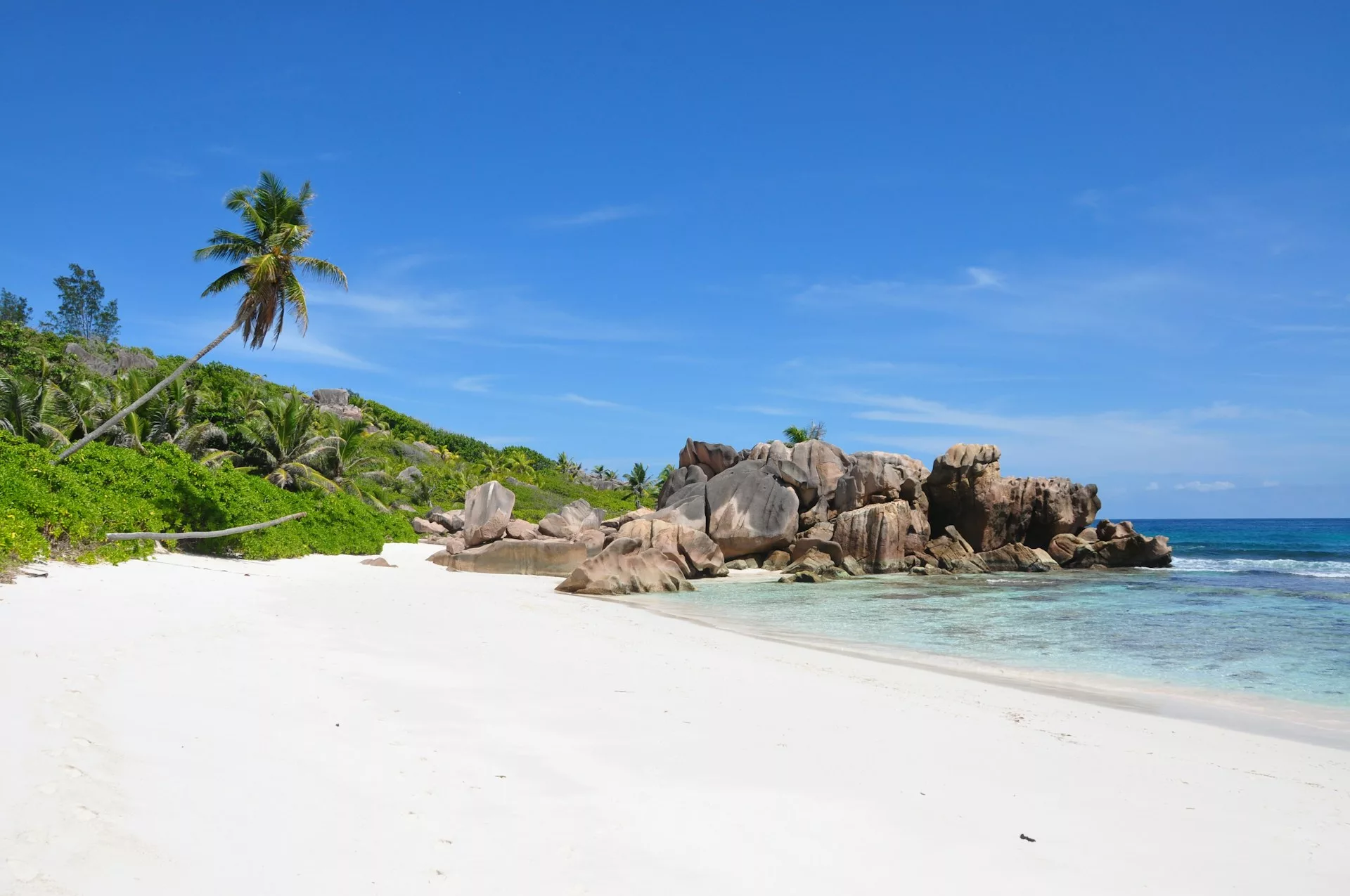

Europe is a continent that never quite runs out of surprises. For every Eiffel Tower selfie and Colosseum queue, there exists a cobbled square somewhere that sees more cats than camera lenses, a coastline where the water is just as blue but the sunbeds aren't three rows deep, a mountain town where the guesthouse owner still pours the local grappa without being asked. The well-trodden path across Europe is well-trodden for good reason — but it can also feel, at peak summer, like a very expensive theme park.
These five destinations represent something different. They are not secret in the conspiratorial sense — each has infrastructure, character, and genuine things to do — but they remain dramatically undervisited relative to their quality. Think of them as the hidden gems in Europe that reward the curious traveller who is willing to look slightly off the postcard rack.
Matera, Italy — The Ancient City That Time Forgot (Then Found Again)
Carved into the ravines of Basilicata in Italy's deep south, Matera is one of the oldest continuously inhabited cities on earth. Its sassi — the cave dwellings that tumble down the gorge walls like a frozen landslide — were declared a UNESCO World Heritage Site in 1993, and the city served as the backdrop for the 2021 Bond film No Time to Die. Yet somehow, Matera remains conspicuously absent from most European itineraries.
Getting here requires intent. The nearest major airport is Bari, roughly 65 kilometres to the northeast, and the journey involves either a bus or a rental car winding through sun-bleached Apulian farmland. That friction is, frankly, the point. Arriving in Matera on your own terms, watching the sassi materialise in the evening light as you descend into the gorge, feels genuinely earned.
Stay, if you can afford it, in a converted cave hotel — several exist along the Sasso Caveoso, where rooms are carved directly into the tufa rock, complete with vaulted ceilings and remarkable quiet. Eat at the modest trattorias along Via Bruno Buozzi where the pasta is made fresh and the local Aglianico wine is poured with a generosity that feels almost transgressive. The official Matera tourism resource has useful orientation guides, but the city rewards wandering above all else.
Kotor, Montenegro — Adriatic Drama Without the Dubrovnik Crowds
Everyone knows Dubrovnik. Fewer people make it to Kotor, which sits just 87 kilometres to the south in Montenegro and offers a similar cocktail of Venetian-era architecture, Adriatic light, and medieval city walls — without the cruise-ship gridlock that now afflicts its Croatian neighbour during peak season.
The Bay of Kotor is, by some measurements, the southernmost fjord in Europe, and the effect as you drive around its horseshoe perimeter is quietly spectacular. The old town is compact and walkable, ringed by 4.5 kilometres of city walls that climb steeply to the Fortress of St John at 260 metres above sea level. The climb takes around 45 minutes and rewards you with views across the bay that are, in the truest possible sense of an overused phrase, breathtaking.
Beyond the walls, the surrounding villages deserve exploration. Perast, 12 kilometres up the coast, is a baroque ensemble of stone palaces and a church on an artificial island that appears to float in the middle of the bay. It has one main street, several good fish restaurants, and virtually no tourist tat. Montenegro's official tourism board pages on Kotor offer practical logistics on getting there from Tivat Airport, which is only 8 kilometres away and served by several European carriers.
Ghent, Belgium — Bruges' Sharper, More Interesting Sibling
The usual Belgium itinerary runs Brussels to Bruges, occasionally with Antwerp bolted on. Ghent sits between all three and is, by most measures, the most rewarding of the lot — yet it attracts a fraction of the visitor numbers that Bruges pulls from the tour bus circuit.
What Ghent has that Bruges lacks is lived-in texture. It is a university city of around 260,000 people, which means its medieval centre — canals, gabled guild houses, and the remarkable medieval trio of Saint Bavo's Cathedral, the Belfry, and Saint Nicholas' Church looming over the Korenmarkt — exists alongside independent bars, vinyl record shops, and restaurants that are genuinely trying to do something interesting rather than serving tourist-grade moules-frites.
The Ghent Altarpiece, Jan van Eyck's extraordinary 15th-century polyptych painting housed in Saint Bavo's Cathedral, is among the most significant works of art in Europe and has recently been fully restored to its original brilliance. Seeing it in person, in the quiet of a Flemish Gothic chapel, is a very different experience from staring at it on a museum app. Visit Gent's official tourism site provides detailed neighbourhood guides and a useful overview of the city's famously strong craft beer culture. Ghent is also notably easy to reach — it sits directly on the Brussels–Bruges rail line, making it a natural addition to any Belgian itinerary.
Sintra, Portugal — Yes, You've Heard of It. No, You Haven't Really Been
Sintra sits 30 kilometres west of Lisbon in the Serra de Sintra hills and is, technically, very much on the tourist map — day-trippers pour in from the capital by train every morning. But the majority of those visitors see the same two or three sites, eat lunch in the town centre, and head back before the afternoon turns golden. The result is that deeper Sintra — its forested trails, its hidden quintas, its Atlantic-facing clifftop position — remains genuinely underexplored.
The palaces are extraordinary: the Palácio Nacional da Pena is a riot of Romantic-era colour and fantasy perched dramatically on a hilltop; the Quinta da Regaleira offers an entirely different energy, with its Initiatic Well — a 27-metre spiral staircase descending into the earth, built for Masonic ritual — representing one of the strangest and most compelling architectural experiences on the continent. The Parques de Sintra official site manages ticketing for the main sites and is worth consulting before you travel to book ahead — queues without pre-booking can be punishing in summer.
The real Sintra trick is to stay overnight. The day-trippers thin dramatically by early evening, the light on the palaces becomes extraordinary, and the town takes on a quieter, stranger atmosphere entirely its own. Walk the Caminho dos Moinhos trail through the forest at dusk and you'll understand why Lord Byron described this corner of Portugal as "glorious Eden."
Plovdiv, Bulgaria — Europe's Oldest City Deserves Your Attention
Plovdiv makes a compelling case for being the most underrated city in Europe, full stop. It is, depending on how you count, one of the oldest continuously inhabited cities in the world — older than Rome, older than Athens — and its Old Town, a neighbourhood of 19th-century National Revival architecture clinging to the three hills above the Maritsa River, is genuinely ravishing.
The houses here are a Bulgarian architectural form unique to the region: timber-framed and bay-windowed, painted in bold terracotta and cobalt and ochre, their upper floors jutting out over cobbled lanes as if leaning in to eavesdrop. Several have been converted into house-museums that you can walk through for the equivalent of a pound or two, their rooms preserved with an intimacy and lack of fanfare that more famous cities could learn from.
Plovdiv was European Capital of Culture in 2019, which brought investment and attention — but not, crucially, the kind of mass-tourism infrastructure that tends to follow such designations in Western Europe. The Kapana Creative Quarter, a small grid of streets in the city centre, has evolved into a genuinely good eating and drinking neighbourhood: craft beer, natural wine, Bulgarian meze, and a relaxed energy that feels authentically local rather than performed for visitors. Flights from the UK to Sofia, 150 kilometres away, take around three hours; from Sofia, Plovdiv is easily reached by train or bus. Visit Plovdiv's official tourism portal is a solid starting point for planning your trip.
How to Actually Find (and Keep) Hidden Gems
The paradox of writing about hidden gems in Europe is, of course, that writing about them is the first step towards them ceasing to be hidden. But the more useful observation is this: the destinations that remain genuinely undervisited tend to share certain characteristics. They are harder to reach by the path of least resistance. They lack a single iconic image that circulates easily on social media. Their pleasures are cumulative and specific rather than immediately photogenic. And they require a slight willingness to be uncertain — to arrive without a perfect itinerary and let the place reveal itself.
None of the five cities above are particularly difficult to reach. None require specialist knowledge or significant additional budget. What they require is the decision to choose them over the default — to pick Ghent over Bruges, Kotor over Dubrovnik, Plovdiv over Prague. That decision is, in the end, a simple one. And the reward is a version of European travel that still feels like discovery.
For travellers who enjoy approaching cities with this same spirit of exploration beyond the obvious — digging into local neighbourhoods, finding the spots that residents actually use rather than the ones that appear on every listicle — the approach applies just as well beyond Europe. If you're curious about how this kind of thinking works in a North American context, our guide to hidden gems in Tampa applies the same philosophy to Florida's most interesting city, with some genuinely surprising results. And for those who find themselves drawn to the idea of exploring a destination in depth across multiple days, the best day trips from Tampa guide illustrates how a well-chosen base city can unlock an entire region — a principle that works equally well whether you're based in Plovdiv exploring the Rhodope Mountains or in Ghent making forays into the Flemish countryside.
Practical Notes for European Travel
A few logistical points worth holding in mind when planning around these destinations:
- Matera pairs naturally with the Puglia coast — base yourself in Bari or Alberobello and add Matera as a two-night detour inland.
- Kotor works well combined with a drive along the Albanian Riviera, now increasingly accessible and even more undervisited.
- Ghent can be done as a day trip from Brussels but rewards a one- or two-night stay — book accommodation in the historic centre rather than the outskirts.
- Sintra is best approached by arriving early (the Comboios de Portugal train from Lisbon Rossio station runs frequently) and staying overnight to experience the town after the crowds thin.
- Plovdiv is most comfortable in late spring or early autumn — summer temperatures can be fierce on the Thracian plain, and the shoulder seasons offer both better weather and even thinner crowds.
The broader point is that Europe's secondary and tertiary cities are, right now, in a kind of golden window. Investment from European Capital of Culture programmes, improved low-cost flight routes, and a generation of independent accommodation owners who care about their product have quietly raised the standard of experience in places that haven't yet attracted the pricing pressure that comes with mainstream fame. That window will not stay open indefinitely. Matera is already nudging upwards in profile; Kotor gets busier each summer. The time to visit these places is not after they become famous. It is now, while they still feel like yours to discover.

Standard Minivan
 5
5
from just €7.65 per person
Group travel? Perfect option is our minivan, 5 passengers and 4 medium suitcases

Standard Saloon
3
from just €10.20 per person
Travel in comfort in these late model saloons, takes 3 passengers and 2 medium suitcases

Large Standard Minivan
8
from just €11.05 per person
Group travel? Perfect option is our large minivan, 8 passengers and 6 medium suitcases

Executive Saloon
3
from just €17.00 per person
Travel in style in these late model saloons, takes 3 passengers and 2 medium suitcases

Standard Minibus
9
from just €18.70 per person
Group travel? Perfect option is our minibus with upwards of 9 passengers and 9 medium suitcases

Luxury Saloon
3
from just €22.95 per person
Travel in luxury in these late model saloons, takes 3 passengers and 2 medium suitcases
Door to door private airport transfers to your destination, anywhere!
Ride Transfer Direct is a company dedicated to quality airport transfers globally. Our team have over 60 years of experience delivering services in the most popular destinations around the world